By Lauren Holland
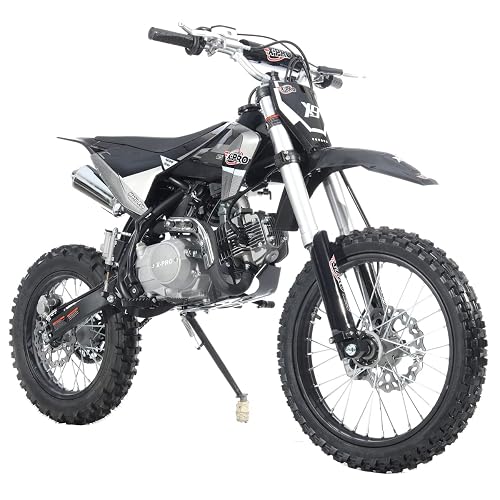
A road legal dirt bike is possible, but only if the specific machine is certified or can be modified to meet your state’s vehicle code. Most off-road dirt bikes are sold without headlights, turn signals, horns, mirrors or a speedometer, so they cannot be registered for public roads as delivered. Dual-sport models from the factory are the simplest route, while converting a pure motocross bike usually requires parts, inspection and paperwork.
Why most dirt bikes aren’t road legal from the factory
Motocross and enduro bikes are built for closed courses and trails. Their engines, suspension and tires are tuned for dirt, and manufacturers leave out the equipment that public road rules require. Owners often report that the most common gaps are a headlight with a high-beam and low-beam function, a tail light and brake light, a horn, turn signals, rear-view mirrors and a speedometer. Some states also require a spark arrestor, a license plate bracket and specific tire tread depth.
Because these requirements vary, a bike that is legal in one state may be illegal in another. Check your state motor vehicle agency or DMV website before buying parts, since they define what counts as a registrable motorcycle or off-highway vehicle.
Factors that decide whether your bike can be registered
Several factors determine whether a machine can pass registration. The most important are the bike’s original certification, the emissions and noise rules that apply to its engine, and whether a VIN is present. Bikes sold as dual-sport or “street-legal” from the manufacturer typically carry a VIN and come with the required equipment already installed. Pure off-road models usually do not have a VIN plate and cannot be titled without a separate inspection process.
Engine displacement and top speed can also matter. Some states set limits on the size of motorcycles that may be registered for road use, and others treat small bikes differently under their moped or off-highway classes. Noise limits are another common barrier, so an aftermarket exhaust that is loud or lacks a spark arrestor may fail inspection.
What to do about it
If you want a road legal dirt bike, start by choosing a machine that was designed for street use. Dual-sport models are built with lights, mirrors, a speedometer and a VIN, and they usually have tires with some road capability. If you already own an off-road bike, plan a conversion step by step rather than buying parts at random.
- Confirm your state’s rules by reading the motor vehicle agency’s guidance on motorcycles and off-highway vehicles.
- Check whether your bike has a VIN and a manufacturer’s certificate of origin. Without these, titling is often difficult.
- List the required equipment: headlight, tail light, brake light, horn, turn signals, mirrors, speedometer, license plate bracket and any noise or spark arrestor rules.
- Install compliant parts and keep receipts, since many inspectors ask for proof of purchase.
- Schedule the required inspection, bring the bike, paperwork and insurance, and register the vehicle.
- Get liability insurance that covers street use. Many off-road policies do not cover public roads.
Practical tips before you ride on the street
- Check tire tread and pressure. Knobby off-road tires may grip poorly on pavement, especially when wet.
- Make sure the lights work at night and that the brake light activates from both controls.
- Keep a spark arrestor and exhaust in compliance with local noise limits.
- Ride defensively. Dirt bikes are less visible in traffic, and many drivers are unfamiliar with them on roads.
- If you are unsure about legality, ask the local motor vehicle office before you ride to the trailhead on public roads.
Note: Traffic and vehicle registration laws change, and inspection rules are set locally. Consult your state motor vehicle agency or a qualified motorcycle shop before modifying your bike for road use.
Related questions
Can I ride a dirt bike on the road without registration?
In most states, no. Riding an unregistered, unlicensed machine on public roads can lead to fines and impoundment, and it can void your insurance.
Do dual-sport bikes need a motorcycle license?
Usually yes. Most states require a motorcycle endorsement for any street-registered bike, though some have separate rules for small displacement machines.
Are electric dirt bikes easier to make road legal?
It depends on the state and the model. Some electric bikes with lights and a VIN can be registered, but many are classed as off-road only. For a broader look at options, see Rzr Electric Dirt Bike (2026): Which Should You Choose?.
Is the Honda CRF125F a good road-capable starter bike?
It is a small off-road machine that most owners ride on trails and tracks. For its specs and suitability, read Is the Honda CRF125F Dirt Bike Good for Beginners? Specs and Buying Tips.
Do I need special tires to ride on pavement?
Tires with a lower knob height and a more road-oriented tread pattern handle pavement better. For tire types and load ratings, see Off-Road Tires Explained: Types, Sizes and Load Ratings.
Ready to choose one?
About Lauren Holland
Lauren Holland is part of our editorial team and reviews and edits our ATV, UTV/side-by-side & dirt bikes guides, checking product details against manufacturer specifications and owner feedback.