As an Amazon Associate I earn from qualifying purchases. This page may contain affiliate links.
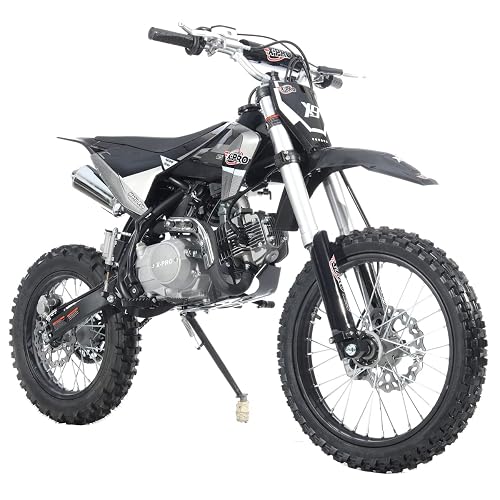
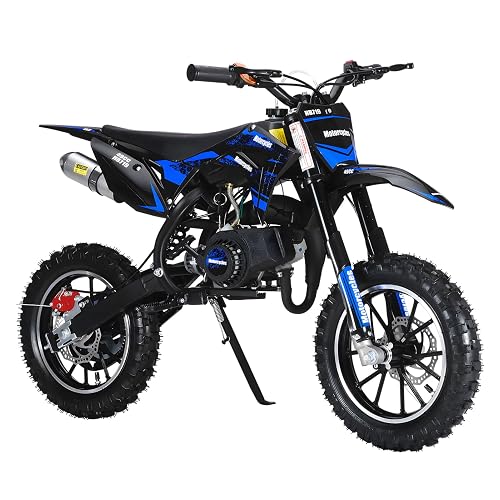
Choosing between 250cc dirt bike motorcycles usually comes down to two popular categories: the four-stroke 250F-class bike and the two-stroke 250 bike. The four-stroke suits riders who want broad, controllable power, easier daily maintenance and strong trail manners. The two-stroke suits experienced riders who want a light, snappy machine for tight woods and motocross-style tracks. Beginners and trail riders generally do best with the four-stroke, while racers and advanced riders chasing a sharp powerband often prefer the two-stroke.
Quick Comparison: Four-Stroke vs. Two-Stroke 250cc Dirt Bikes
| Criteria | Four-Stroke 250cc (e.g., Honda CRF250R/CRF250F-class) | Two-Stroke 250cc (e.g., KTM 250 SX-class) |
|---|---|---|
| Power delivery | Smooth, broad, easy to modulate | Sharp, strong mid-to-top rush |
| Typical weight range | Heavier, roughly 230–250 lbs wet on common models | Lighter, roughly 215–230 lbs wet on common models |
| Maintenance interval | Valve checks and oil changes at longer intervals | Top-end rebuilds more frequent; premix or injection-oil upkeep |
| Fuel and oil | Gasoline and 4-stroke oil | Premix or dedicated 2-stroke oil and gas |
| Starting and beginner friendliness | Electric start on many models, forgiving idle | Kick or electric start depending on model, less tolerant of poor jetting |
| Trail and woods handling | Excellent traction and low-end control | Agile, but requires more clutch and throttle skill |
| Motocross and track use | Competitive, especially with modern fuel injection | Very competitive, favored by many racers |
| Noise and emissions | Generally quieter, cleaner-burning | Louder exhaust note, more smoke |
Weight figures and service intervals vary by model year and manufacturer, so check the owner’s manual for your specific bike. The rest of this comparison covers each criterion in more detail.
Power Delivery: Four-Stroke Wins for Control
A four-stroke 250cc engine fires once every two crank revolutions, which gives it a fuller, more linear power curve. For most riders this means the bike pulls predictably from low rpm, and the throttle response feels easier to manage on steep climbs, loose hardpack and technical singletrack. Owners often report that the four-stroke is less tiring over a long day because it doesn’t demand constant clutch work to keep the engine in its power band.
The two-stroke 250 fires every revolution, producing a hard, sudden surge once the powerband comes on. Riders who enjoy holeshots, whoops and jumps often prefer this character. It rewards good technique and rewards it well, but it can feel abrupt in slow, technical terrain. Winner for control and everyday trail use: four-stroke. Winner for an aggressive, high-rpm rush: two-stroke.
Weight and Handling: Two-Stroke Wins on Agility
Because the two-stroke engine has fewer moving parts in its valvetrain and generally lower overall weight, the bike tends to feel lighter when you lift it, turn it and jump it. Lower weight makes quick direction changes easier and can reduce fatigue when you are picking the bike up after a tip-over. Four-stroke 250s carry more mass, which adds stability at speed but takes more effort in tight corners.
Suspension setup matters as much as raw weight. Both types need sag and compression settings matched to rider weight and terrain. A poorly set-up bike feels heavy regardless of its dry weight. Before judging handling, set sag to the manufacturer’s recommendation and test on a familiar loop. Winner for agility: two-stroke. Winner for planted stability at speed: four-stroke.
Maintenance and Long-Term Upkeep: Four-Stroke Wins for Simplicity
A four-stroke 250 needs regular oil changes, air filter cleaning, valve clearance checks at the intervals listed in the manual, and occasional chain and brake service. Because the engine is lubricated by a separate oil system, premixing is not required. For a trail rider who wants to show up, ride and go home, this is a major advantage.
Two-stroke 250s demand more frequent top-end attention, including piston and ring replacement when compression drops. Fuel mixture accuracy matters, and owners who use the wrong oil ratio or stale fuel often see faster wear. Riders who enjoy wrenching may not mind this, but it is a real time commitment. Maintenance guidance here is general; for engine rebuilds or valve work, consult a qualified motorcycle mechanic or your dealer’s service department. Winner for simplicity and lower routine maintenance: four-stroke.
Starting, Fueling and Beginner Friendliness: Four-Stroke Wins
Four-stroke 250s generally idle smoothly, restart well when warm, and tolerate small errors in throttle input. Many models offer electric start, which removes the kick-start learning curve. Two-stroke engines are more sensitive to jetting, carburetor settings and altitude changes, and they can be harder to start cold, especially on older machines.
If you are new to motocross-style bikes, the four-stroke’s forgiving nature makes learning clutch control, body position and braking less stressful. Winner for beginners: four-stroke.
Trail, Woods and Motocross Performance: A Split Decision
On tight, slow trails with roots and off-camber sections, the four-stroke’s low-end pull gives better traction and fewer stalls. In open desert or motocross tracks where you spend time in the top half of the rev range, the two-stroke’s punch and quick acceleration are hard to match. Racers at many levels still prefer the two-stroke for this reason, while modern fuel-injected four-strokes have closed much of the gap on the track.
Think about where you ride most. A trail rider on mixed terrain will usually be happier with a four-stroke, and a motocross rider focused on lap times may find the two-stroke more rewarding. Winner for trail riding: four-stroke. Winner for motocross and open-track racing: two-stroke (with the four-stroke close behind).
Noise, Emissions and Trail Access: Four-Stroke Wins
Four-strokes are generally quieter and produce less visible smoke, which matters at many trail systems, private land venues and shared riding areas. Check local noise limits and park rules before you ride, since some areas enforce decibel or sound-test requirements. Two-stroke exhaust is distinctive and often louder, and some riders take extra steps with spark arrestors and quieter exhaust systems where required. Winner for noise and trail access: four-stroke.
Which Should You Choose?
- Choose a four-stroke 250cc if you are a beginner or intermediate rider, you ride mostly trails or mixed terrain, you want electric start and easy maintenance, or you ride in areas with strict noise rules.
- Choose a two-stroke 250cc if you race motocross or open-track events, you enjoy a sharp, high-rpm powerband, you are comfortable with premix and top-end work, and you want the lightest, most agile machine in the class.
- Choose a four-stroke if you plan to ride with family or friends of varying skill levels and want a bike that stays predictable under mixed conditions.
- Choose a two-stroke if your riding partners are experienced racers and you want to keep pace on fast, aggressive laps.
Top Picks to Compare
For a four-stroke option, look at the Honda CRF250F for trail-friendly tuning or the Honda CRF250R for a motocross-focused setup. For a two-stroke, the KTM 250 SX is a common choice among racers. Shop the models that match your riding style, then compare seat height, suspension specs and local dealer support before you commit.
For more background on choosing a first bike, see Is the Honda CRF125F Dirt Bike Good for Beginners? Specs and Buying Tips. If you are also considering electric options for younger riders, 9 Best Childrens Electric Dirt Bikes (2026): Expert Picks and 5 Best Childs Electric Dirt Bikes (2026): Expert Picks cover that category, and Rzr Electric Dirt Bike (2026): Which Should You Choose? compares a different style of electric ride.
FAQ
Is a 250cc dirt bike too big for a beginner?
Many instructors consider a 250cc four-stroke suitable for intermediate riders rather than absolute beginners. A 125cc or smaller bike is often a gentler starting point, but a confident adult beginner may manage a 250F with a smooth throttle and good instruction. Start with a riding course and consult a qualified instructor before choosing.
Are two-stroke 250s still legal to ride on trails?
Legality depends on local land management rules, noise limits and spark arrestor requirements. Many trail systems allow two-strokes with proper equipment, while some restrict them. Check the rules for your specific park or riding area before you ride.
How often should I service a four-stroke 250cc?
Follow the service schedule in your owner’s manual. Oil and filter changes are commonly recommended every few riding hours, with valve checks at longer intervals. Riders in dusty conditions often service more frequently. Consult a qualified mechanic for valve or top-end work.
Do I need to premix gas for a 250cc dirt bike?
Four-stroke 250s do not require premixing; they use a separate oil system. Two-stroke 250s do require premixing or injection oil, and the ratio must match the manufacturer’s specification. Using the wrong ratio can damage the engine.
Which 250cc type has better resale value?
Resale value depends on model year, condition, service history and local demand. Four-stroke trail-oriented bikes often draw a wide buyer pool, while racing two-strokes can be strong in motocross markets. Check current listings in your area and compare maintenance records when evaluating a used bike.
Conclusion
Both types of 250cc dirt bike motorcycles are capable machines, and the right choice depends on how and where you ride. The four-stroke offers smoother power, easier maintenance, quieter operation and beginner-friendly behavior, making it the practical pick for most trail riders. The two-stroke rewards aggressive riding with a lighter, sharper character that suits racers and experienced riders. Match the engine to your terrain, skill and maintenance tolerance, test ride if you can, and follow the owner’s manual for every service task.