 By Graham Fisher
Updated November 2026
Black mamba ATV tires are a popular aftermarket choice for riders who want aggressive traction in mud, sand and loose trail conditions. This guide walks you through reading the size code, matching the tread to your terrain, checking load and ply ratings, and setting up the tires correctly so you get the grip you paid for. By the end, you should be able to narrow down a set that fits your machine and riding style.
Step 1: Confirm Your Wheel and Tire Size
Before you look at any tread pattern, you need the exact size your machine takes. ATV tire sizes are printed on the sidewall in a format such as 25×8-12 or 26x9R14. The first number is the approximate overall diameter in inches, the second is the section width, and the last number is the wheel rim diameter in inches. Some sizes use a letter, such as R for radial construction.
Shopping for one? See our guide: 7 Best Atv Quad Tires for Sale: Our Picks for Every Trail.
Check the sidewall of your current tires, the owner’s manual, or the sticker inside the front rack. Measure the actual rim diameter with a tape if you have any doubt, since a tire that fits the bead but sits at the wrong diameter will rub the fender or throw off your gearing.
Measurements to Record
- Rim diameter (commonly 10, 12 or 14 inches on most ATVs)
- Current overall tire diameter, measured from the ground to the top of the tire
- Section width, measured across the tread at the widest point
- Available clearance between the tire and the frame or fender at full suspension compression
Step 2: Match the Tread to Your Terrain
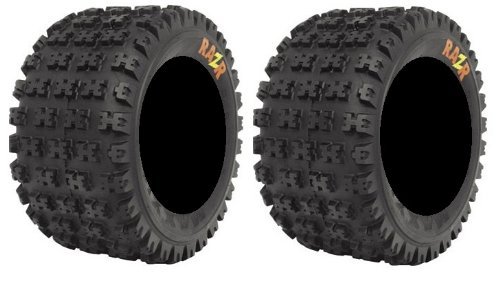
Tread depth and pattern drive most of how a tire behaves. Deep, widely spaced lugs bite into mud and soft ground and clear debris well. Tighter, shallower patterns run quieter and last longer on hard-packed trails and pavement. Most black mamba-style aggressive tires are built for the first use, so they suit riders who spend time in deep ruts, swamp and loose sand.
Think about how you actually ride, not how you hope to ride. A machine used mostly on gravel roads and open fields will not benefit from the same lug depth as one that lives in creek beds.
Terrain Matching Table
| Riding Terrain | Recommended Tread Style | Trade-off |
|---|---|---|
| Deep mud and swamp | Tall, widely spaced lugs | Louder, more vibration on pavement |
| Loose sand and dunes | Paddle-style or open lugs | Less bite on hard surfaces |
| Mixed trail and mud | Medium-depth aggressive lugs | Compromise on both extremes |
| Hard-packed trail and farm use | Lower, tighter lugs | Less performance in soft ground |
Step 3: Check Load Rating and Ply Construction
Every tire carries a load index and a ply rating or equivalent construction specification. The load index tells you the maximum weight each tire is rated to carry at a given pressure. Your machine’s gross vehicle weight, including rider, gear, cargo and any winch or accessories, must stay within the combined rated capacity of the four tires.
Ply construction affects puncture resistance and sidewall stiffness. Higher-ply tires resist sidewall cuts from rocks and stumps but can feel firmer on the trail. Manufacturers specify these ratings, so compare the numbers printed on the sidewall rather than relying on marketing terms.
Load Check Steps
- Find your machine’s maximum rated load in the owner’s manual.
- Add the weight of the rider, typical gear, cargo and accessories.
- Confirm the tire load index covers that total at the pressure you plan to run.
- If you carry a winch, rack loads or a rear rack, add those weights to the total.
Step 4: Set Tire Pressure Correctly
Pressure is where many riders lose the benefit of a good tire. Lower pressure widens the contact patch and improves flotation in mud and sand, but too low risks bead unseating, rim damage and rollovers on steep ground. Too high reduces grip and makes the ride harsh.
Start with the pressure range in the manufacturer’s guidance, then adjust for your conditions. Check pressure when the tires are cold, and use an accurate gauge. For detailed guidance on the numbers, see Tire Pressure for ATV Tires: How to Set the Right PSI for Trail and Mud. If you want to verify your gauge, Low Pressure Tire Gauge for ATV Tires: How to Check PSI Accurately explains what to look for.
Pressure Adjustment Tips
- Lower pressure slightly for mud and sand, then recheck after the ride.
- Raise pressure for hard trail, pavement and heavy loads.
- Never exceed the maximum pressure printed on the sidewall.
- Recheck after temperature changes, since pressure drops as air cools.
Step 5: Confirm Fitment and Clearance
A larger tire can change ground clearance, gearing, speedometer accuracy and steering effort. Before ordering, compare the overall diameter of the new tire with the stock size. Even a small increase can rub inside the fender at full steering lock or during suspension travel.
Also check the rim width. Each tire has a recommended rim width range. Mounting a tire on a rim that is too narrow or too wide changes the sidewall shape and can reduce stability.
Fitment Checklist
- Overall diameter within a fraction of an inch of stock, unless you plan a lift or gear change
- Rim width within the tire manufacturer’s approved range
- Clearance tested at full lock and full suspension compression
- Bead seat and valve stem compatibility with your rims
Step 6: Mount, Balance and Break In the Set
Have the tires mounted by someone with the right equipment, especially with stiff sidewalls and larger beads. Balance each wheel, since out-of-balance tires cause vibration at speed. Many riders also use a light bead sealer to help the tire seat properly on the rim.
New aggressive tires often have mold release and sharp edges on the lugs. Ride them gently for the first several miles, avoid hard cornering on pavement, and recheck pressure afterward.
Common Mistakes
- Choosing the most aggressive tread for mostly hard-packed riding, which adds noise and wear.
- Ignoring the load index and overloading the machine with winch, cargo and rider weight.
- Running pressure too low on steep, rocky terrain where a sidewall cut or bead unseating is likelier.
- Failing to measure clearance, leading to rubbing at full lock.
- Skipping balancing, then blaming the tire for vibration.
- Assuming all black mamba-style tires share the same size range or ply rating. Verify each size separately.
Tips for Better Results
- Carry a small tire gauge and a portable pump or compressor on group rides.
- Keep a record of pressure settings that worked in different conditions.
- Inspect sidewalls and lugs after every hard ride for cuts and missing chunks.
- Rotate or replace tires in sets to keep handling even across the machine.
Recommended gear
A reliable digital or dial tire gauge lets you set pressure accurately for mud, sand and trail, and a low-range gauge is especially useful for the lower pressures aggressive tires often run. View on Amazon
A portable 12-volt air compressor makes it easy to refill after airing down for mud and to restore pressure at the trailhead before you ride home. View on Amazon
Wheel and tire balancing beads or a bead sealer can help when you are mounting new tires on the trail or at home. View on Amazon
FAQ
What size do I need for black mamba ATV tires?
Match the size printed on your current tires, or the size listed in your owner’s manual. Confirm the rim diameter and overall diameter, then check clearance before ordering.
Are black mamba ATV tires good for mud?
Aggressive, deep-lug tires of this style are generally designed for mud and soft ground. Their performance depends on the specific model, pressure and rider technique.
How low should I run ATV tire pressure in mud?
Many riders drop a few PSI from their normal setting for mud, staying within the sidewall maximum and the manufacturer’s guidance. Avoid going so low that the bead can unseat.
Will bigger tires affect my speedometer?
Yes. A larger overall diameter changes the distance covered per wheel revolution, so the speedometer and odometer readings will be off until recalibrated or adjusted.
Can I mix tire types on my ATV?
Mixing tread patterns or sizes can affect handling and stability. Most owners run matching sets, and manufacturers often recommend the same size and model on all four positions.
How often should I check tire pressure?
Check before every ride and again after any major change in terrain or temperature. Pressure changes with air temperature and with the heat built up during riding.
What is the load index on an ATV tire?
The load index is a code representing the maximum weight one tire can carry at a specified pressure. Add up your machine’s total load and confirm the tires cover it.
Should I have ATV tires balanced?
Yes, balancing reduces vibration and uneven wear. Ask the shop to balance each wheel after mounting, especially on larger aggressive tires.
Conclusion
Choosing black mamba ATV tires comes down to fitment, terrain, load and pressure working together. Confirm your size and clearance first, then match the tread to how you actually ride. Verify the load rating against your total weight, and set pressure for the conditions you face. Ride the new set gently at first, and check it after every hard outing. For specific tire questions or structural concerns, consult a qualified tire technician or your dealer.
Related reading
Ready to choose one?
About Graham Fisher
Graham Fisher is part of our editorial team and reviews and edits our ATV, UTV/side-by-side & dirt bikes guides, checking product details against manufacturer specifications and owner feedback.